

Outsourced Benefits Expertise: When It Makes Sense (and When It Doesn’t)
Benefits administration complexity often outpaces internal HR capacity. This article explores when outsourced benefits expertise adds value versus when internal prioritization, vendor management or hiring is the real solution. Includes decision triggers around bandwidth, complexity and risk, plus guidance on project-based versus ongoing advisory relationships.

How to Run a Broker RFP (Without Making Everyone Hate You)
Running a broker RFP doesn't have to be adversarial or exhausting. This guide walks HR leaders through a structured evaluation process that respects everyone's time while delivering real answers—from timeline planning and RFP questions to scoring matrices and reference checks.

Renewal Fatigue Is Real: How to Stop Re-Living the Same Chaos Every Year
Benefits renewal season feels chaotic because organizations compress strategic work into 60–90 days. This guide provides a 12-month benefits renewal planning calendar that distributes work across the year, clarifies stakeholder roles, and transforms renewal from crisis management into strategic execution that reduces fatigue and improves outcomes.

How to Choose the Right PEO Transition Partner (Without Getting Sold To)
This comprehensive guide helps employers leaving a PEO identify trustworthy transition partners by explaining the different types of consultants, brokers, and advisors available, revealing red flags that signal sales-driven agendas, providing specific interview questions to evaluate expertise and transparency, and offering practical frameworks for comparing partners objectively.

Do You Actually Need a PEO? A Decision Guide for Seed-Stage Founders
This comprehensive guide helps seed-stage founders evaluate whether joining a PEO is the right benefits infrastructure decision for their startup. It includes a practical 10-question scoring framework, compares three infrastructure paths, explains when a PEO makes sense, and provides actionable guidance on costs, transitions, and common mistakes.
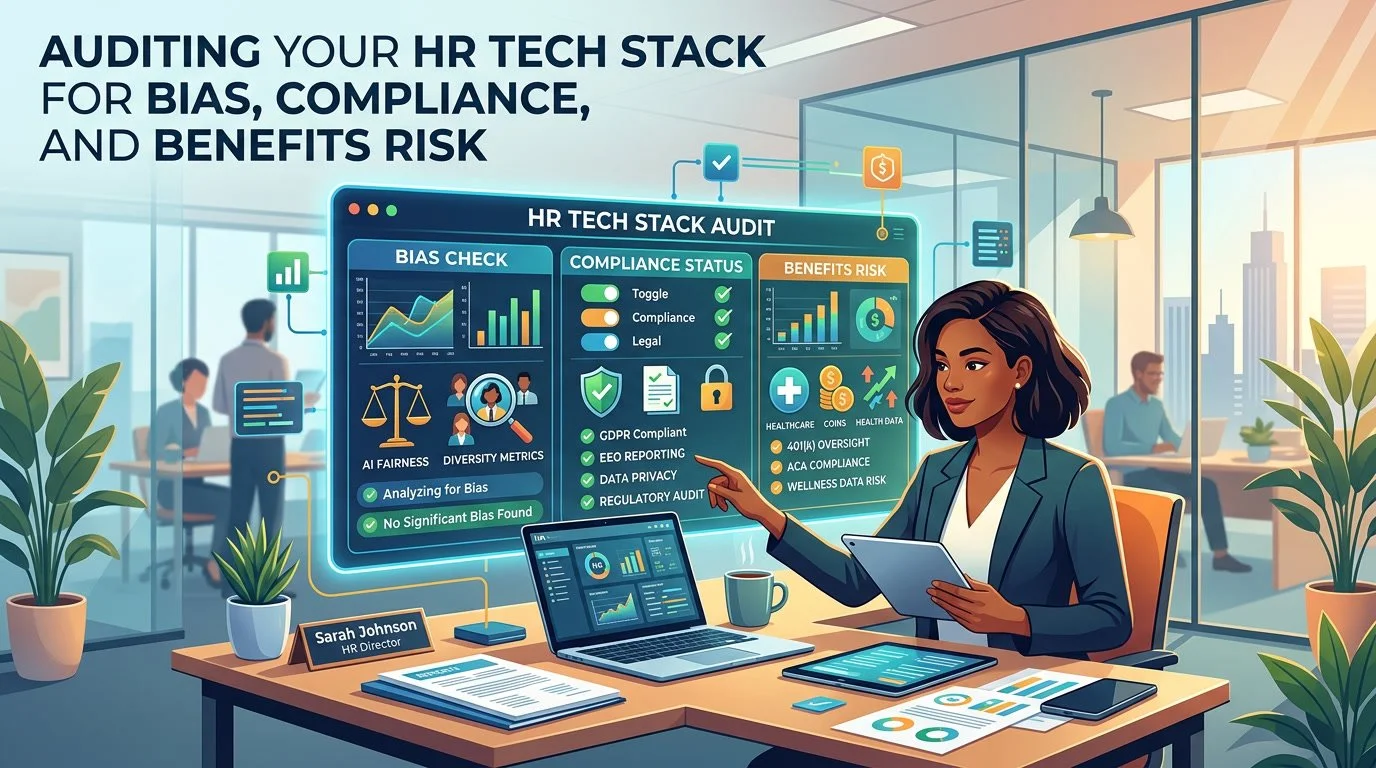
Auditing Your HR Tech Stack for Bias, Compliance, and Benefits Risk
This comprehensive guide explains how to conduct an HR technology audit examining bias risks, compliance gaps, and benefits infrastructure vulnerabilities. It covers algorithmic bias in hiring and benefits, regulatory requirements like NYC Local Law 144, vendor contract risks, data governance, and building ongoing governance frameworks to manage HR tech effectively.

Aligning Your Benefits Package With Your Mission, Vision, and Values
Most companies struggle to connect employee benefits with their stated mission and values. This article provides a practical framework for aligning benefits strategy with organizational values, including concrete examples, cross-functional conversation structures, and actionable steps to close the gap between what you promise and what you deliver.

HCM vs HRIS vs HRMS: What They Mean and Why It Matters
This guide clarifies the differences between HCM, HRIS, and HRMS—three frequently confused HR technology terms. It explains what each system does, why vendors use these acronyms inconsistently, and provides a practical framework for choosing the right HR technology based on company size, needs, and growth stage.

PEO vs. Direct Benefits: What You Actually Gain (and Lose)
PEO vs direct benefits decision depends on company size, HR capacity, and strategic priorities. Direct benefits offer control, transparency, and plan customization but require internal management. PEOs provide simplicity and pooled buying power but limit flexibility. Most transitions make sense between 75-100 employees with adequate HR bandwidth.

From 75 to 500 Employees: Building a Scalable Benefits Roadmap
This comprehensive guide maps benefits infrastructure needs across four growth stages (75, 150, 250, and 500 employees), introduces governance models to prevent decision paralysis, and provides a template roadmap for building scalable employee benefits programs that adapt as your organization grows.

Benefits Infrastructure 101 for Seed-Stage Startups: What to Build Before It Breaks
Benefits infrastructure encompasses the platforms, vendors, processes, and governance that make employee benefits actually work. Seed-stage startups don't need enterprise systems, but they do need five foundational elements: a single source of truth for employee data, clear ownership, documented vendor relationships, a compliance calendar, and an exit path from current contracts. These take hours to establish and prevent months of expensive cleanup later.

How to Budget and Plan a PEO Exit in 12 Months
This comprehensive guide walks you through planning and budgeting a PEO exit over 12 months. It covers hidden costs most companies miss, detailed sample budgets for a 75-employee company, month-by-month planning timelines, timing dependencies, real-world pitfalls, and practical advice on when to bring in external help. Perfect for HR leaders ready to transition away from their PEO.

Have You Outgrown Your PEO? A Checklist for 75–500 Employee Employers
A strategic decision framework for HR and finance leaders at 75–500 employee companies evaluating whether they've outgrown their Professional Employer Organization. Includes 15 assessment questions across cost transparency, strategic control, data access, and service quality, plus practical guidance on timing and transition planning.