
Benefits Infrastructure 101 for Seed-Stage Startups: What to Build Before It Breaks
Audio Overview:

TL;DR: Benefits infrastructure isn't your health plan—it's the system underneath it: platforms, vendors, processes, and governance. At seed stage, you need intentional simplicity, not enterprise-grade systems. Get a single source of truth for employee data, clear ownership, a basic compliance calendar, documented vendor relationships, and an exit path from your current setup.
These five things take hours to establish and save months of pain later.
You just closed your seed round. The to-do list is brutal: hire fast, ship product, don't run out of money. Somewhere between "finalize term sheet" and "figure out health insurance," benefits infrastructure probably landed on a sticky note that got buried under your laptop.
Here's the thing: most founders don't think about benefits infrastructure until something breaks. And by "breaks," I mean your best engineer gets a surprise $4,000 bill because nobody explained the HSA. Or your ops lead spends 11 hours manually reconciling headcount across three spreadsheets. Or you realize—mid-hiring sprint—that your PEO contract locks you into plan options your candidates actually hate.
Benefits infrastructure isn't glamorous. But getting it right early means you're not rebuilding the plane while flying it at 75 employees.
What "Benefits Infrastructure" Actually Means
Let's clear up the jargon. When consultants say "benefits infrastructure," they're not talking about your health plan itself. They're talking about the system underneath it—all the connected pieces that make benefits actually work.
Think of it like this: your health insurance is the water. Benefits infrastructure is the pipes, the water heater, the pressure regulator, and the person who knows where the shutoff valve is.
(You can also think of it as your startup's HR tech stack—the operational backbone that connects benefits, payroll, and compliance into something manageable.)
Specifically, benefits infrastructure includes:
The platforms where employee data lives (your HRIS, payroll system, benefits administration tool)
The vendors who deliver coverage (health insurance carrier, 401(k) provider, FSA/HSA administrator, COBRA administrator)
The processes that keep everything synced (how you onboard someone, how changes flow between systems, who approves what)
The governance that guides decisions (who owns benefits strategy, how you evaluate renewals, what your philosophy actually is)
At the seed stage, most of this is held together with duct tape and good intentions. That's fine—for now. The goal isn't to build enterprise-grade infrastructure on day one. The goal is to make intentional choices that won't require a full demolition later.
Why Early Decisions Compound
Here's what nobody tells you: the decisions you make at 8 employees don't just affect you at 8 employees. They compound.
Good compounding looks like this: You choose a flexible HRIS early. When you hit 40 employees and need to add a second medical plan option, the integration already exists. Enrollment takes two days instead of two weeks. Your ops person doesn't cry.
Bad compounding looks like this: You sign with a PEO because it was fast and easy. Eighteen months later, you've tripled headcount and your per-employee-per-month costs have quietly climbed. You want to leave, but you discover your employee data is locked in their system, your benefits renew on a date that doesn't align with your fiscal year, and your payroll history can't transfer cleanly. The exit will cost you six months of planning and a mid-year tax reset nobody budgeted for.
The pattern is consistent: what feels like a shortcut at 10 employees often becomes expensive technical debt at 50.
This doesn't mean you need to over-engineer everything. It means you should understand what you're trading away when you optimize purely for speed.
The Minimum Viable Infrastructure Checklist
Here's what seed-stage startups actually need—not the enterprise wishlist, but the foundation that keeps you from digging out of a hole later.
1. A Single Source of Truth for Employee Data
This is non-negotiable. You need one system where headcount, job titles, compensation, and benefits elections live. At the seed stage, this might be:
A simple HRIS such as Selerix (Gusto and Rippling often bundle payroll and basic HR)
Your PEO's system, if you're using one
In rare cases, a very well-maintained spreadsheet (but you'll outgrow this fast)
The key question: Can you pull an accurate headcount report in under two minutes? If the answer is "let me check three places," you don't have a single source of truth.
2. Clear Ownership of Benefits Decisions
Somebody needs to own this. At seed stage, it's usually the founder, a fractional HR person, or your operations lead. The title doesn't matter. What matters is that one person can answer:
What's our benefits philosophy? (Competitive? Generous? Bare minimum?)
Who has authority to approve vendor changes?
Where do employees go with benefits questions?
Write this down somewhere. A half-page in your internal wiki is fine. You'll thank yourself at renewal time.
3. Documented Vendor Relationships
You don't need a vendor management system. You need a list. Specifically:
This takes 20 minutes to create. It saves you from the scramble of "wait, when does our contract renew?" three weeks before the deadline.
4. A Basic Compliance Calendar
Benefits come with deadlines. Miss them, and you're looking at penalties, unhappy employees, or both. At minimum, track:
Open enrollment window (when employees can change elections)
Plan renewal date (when you renegotiate or accept new rates)
5500 filing deadline (if you are over 100 employees)
COBRA notification requirements (federal COBRA typically kicks in at 20 employees [3], but check your state—California, New York, and others have "mini-COBRA" laws that apply to smaller employers)
ACA reporting deadlines (once you hit 50 full-time equivalent employees)
A calendar reminder is enough. The point is to know these dates exist before they sneak up on you.
5. An Exit Path from Your Current Setup
This one feels paranoid, but it's the most important. Before you sign any benefits-related contract, ask:
What happens if we want to leave?
How do we get our employee data out?
What's the notice period?
Are there fees for early termination?
If you're using a PEO, this is especially critical. PEO exits are manageable, but they require planning—typically 6 to 12 months of lead time to coordinate new payroll, benefits, and compliance without gaps. Knowing your exit path doesn't mean you're planning to leave. It means you're not trapped.
PEO or Not? The Seed-Stage Decision Tree
The PEO question comes up constantly, and there's no universal answer. Here's a framework:

🟢 A PEO might make sense if:
You have fewer than 20 employees and no HR person
You're hiring across multiple states and need compliance coverage fast
You want health insurance access you couldn't get on your own
You want to save time on shopping Workers Comp policies
Speed of setup matters more than long-term flexibility
🔴 A PEO might not make sense if:
You have strong opinions about your benefits package and want full control
You're growing quickly and will likely outgrow it within 18 months
You're uncomfortable with co-employment (the PEO becomes the employer of record for certain purposes)
You've already found a good broker and can access competitive group rates
Neither choice is wrong. The mistake is signing a three-year PEO contract without understanding the exit implications, or avoiding a PEO out of vague principle when it would actually save you 15 hours a week.
The Cost Reality
Here's where it gets concrete. PEO pricing typically runs $100–$175+ per employee per month (PEPM) for bundled services including payroll, benefits access, and HR support. The alternative—running your own HRIS/payroll platform plus working with a benefits broker—often lands in the $15–$50 PEPM range for the technology, plus broker fees (which may be commission-based or fee-based depending on your arrangement).
The math shifts as you scale. At 15 employees, the convenience premium of a PEO might be worth it. At 75 employees, you might be paying $50,000+ more annually than you would with an unbundled setup—and getting less flexibility in return.
If you're genuinely unsure, a short-term PEO engagement (12 months) with a clear exit timeline can be a reasonable bridge. Just build the exit plan before you need it.
When to Upgrade: Headcount Triggers That Actually Matter
"We'll figure it out when we're bigger" is a common refrain. The problem is that "bigger" arrives faster than expected, and the upgrade window is narrower than you think.
Here are practical triggers:
At 20 Employees
Compliance complexity increases. Federal COBRA requirements typically kick in [3]. Some states have additional mandates that apply even earlier.
Your admin burden starts to show. If one person is spending more than 5 hours per week on benefits-related tasks, you're approaching capacity.
Time to evaluate: Is your current HRIS still working? Is your broker (if you have one) proactive or just reactive?
At 50 Employees
ACA obligations begin. You're now an Applicable Large Employer, which means tracking full-time equivalents, offering compliant coverage, and filing annual reports with the IRS [4].
PEO economics often shift. Per-employee costs may have crept up, and you now have enough scale to get competitive group rates on your own.
Time to evaluate: Should you exit your PEO? Do you need a dedicated HR hire? Is your benefits package competitive for the roles you're hiring?
At 100 Employees
Complexity is unavoidable. Multiple plan options, multi-state compliance, maybe international employees.
Benefits become a recruiting lever. Candidates at this stage expect more than "we have health insurance."
Time to evaluate: Do you have a benefits strategy, or are you just renewing whatever you had last year?
The common thread: don't wait until you're past the threshold to start planning. The best transitions happen when you see the milestone coming, not when you've already tripped over it.
Tradeoffs Worth Naming
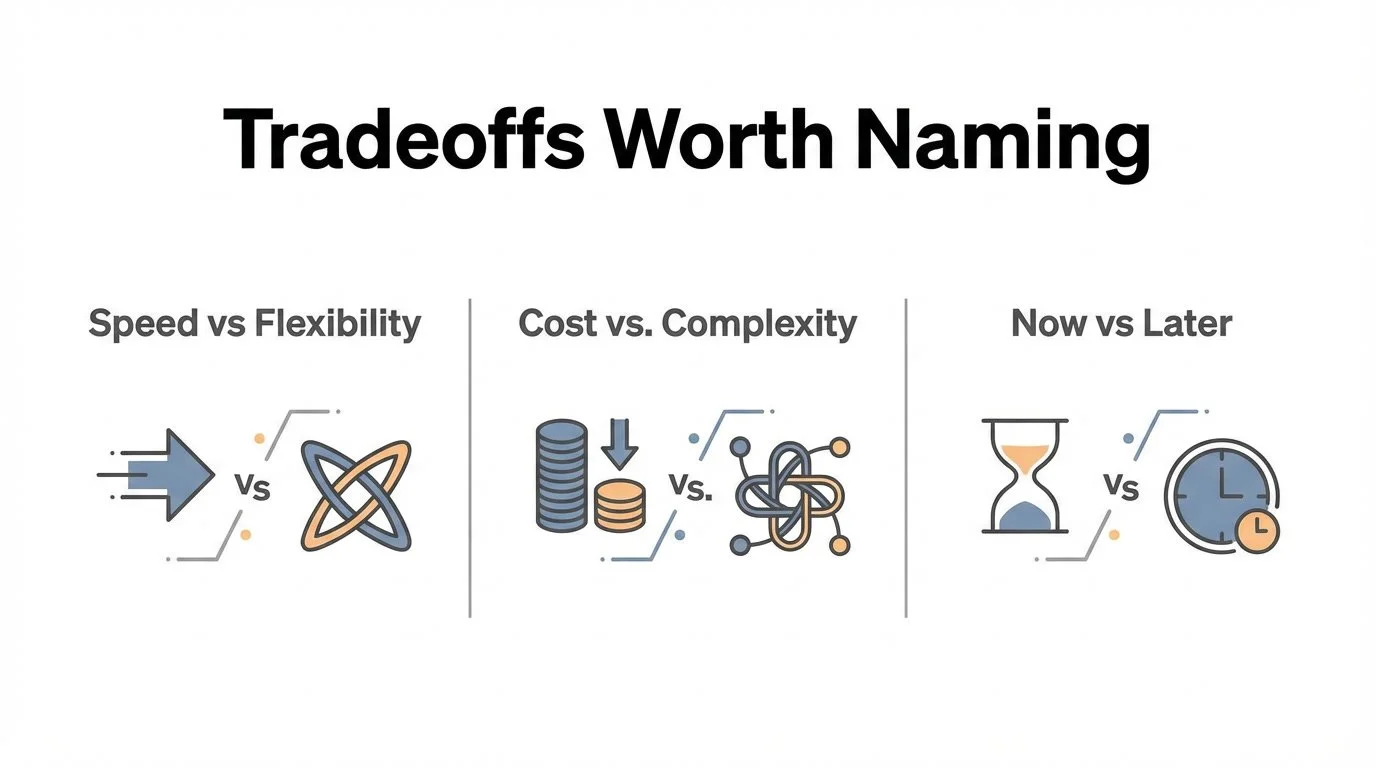
Every infrastructure decision involves tradeoffs. Here are the ones seed-stage founders most often underestimate:
Speed vs. Flexibility PEOs and bundled solutions are fast to implement. They're also harder to customize and harder to leave. If you value control over your benefits package, you're trading speed for flexibility.
Cost vs. Complexity Managing your own benefits (with a broker) often costs less than a PEO at scale, but it requires more internal bandwidth. If you don't have someone to own the complexity, the savings disappear into administrative chaos.
Now vs. Later The cheapest option today might be the most expensive option at 75 employees. Spreadsheet-based tracking is free until you're spending 10 hours a month reconciling errors.
None of these tradeoffs have a "right" answer. They have a right answer for your situation, based on your growth plans, your risk tolerance, and who's actually going to do the work.
The Mindset Shift That Matters Most
Here's the real unlock: stop thinking about benefits as a one-time setup problem.
Benefits infrastructure is a system. Systems need maintenance. They need someone paying attention to contract renewals, compliance deadlines, and whether your current setup still matches your headcount.
At seed stage, this doesn't require a full-time HR hire. It requires:
One person with explicit ownership (even if it's 10% of their job)
A calendar with the key dates (renewals, open enrollment, filing deadlines)
A quarterly gut-check: Is this still working? What's coming in the next 6 months?
The founders who avoid benefits infrastructure fires aren't the ones who built perfect systems on day one. They're the ones who paid attention before things broke.
Build It Before It Breaks
Benefits infrastructure isn't the reason you started a company. But it's one of the reasons your best people stay—or leave.
The good news: At seed stage, you don't need much; a single source of truth for employee data; clear ownership; a basic compliance calendar; an exit path from your current vendors. These aren't expensive. They're just intentional.
The bad news: If you wait until something breaks, the fix is almost always harder, slower, and more expensive than it would have been six months earlier; so build the foundation now. Your future ops lead will thank you.
If you're staring at a benefits decision and you're not sure what you're trading away, we can help you think it through. Bring us your Q.
Frequently Asked Questions
Do seed-stage startups really need to think about benefits infrastructure?
Yes, but proportionally. You don't need enterprise-grade systems at 10 employees. You do need a single source of truth for employee data, clear ownership of benefits decisions, and awareness of your vendor contracts and compliance deadlines. The goal is intentional simplicity—choices you won't regret at 50 employees.
When should a startup consider leaving a PEO?
The most common trigger is hitting 50–75 employees, when PEO per-employee costs often exceed what you'd pay with direct group coverage. Other signals include limited plan flexibility, opaque pricing at renewal, or needing benefits options your PEO doesn't offer. Plan four to six months ahead if you're considering an exit.
What's the minimum benefits package a seed-stage startup should offer?
Most competitive seed-stage packages include health insurance (medical, often dental and vision), a 401(k) option, and basic life insurance. What matters more than the specific benefits is whether you can explain your philosophy and whether the administration actually works. A modest package that runs smoothly beats a generous package that's confusing and error-prone.
How do I know if my current HRIS or PEO is still the right fit?
Ask three questions: Can you pull accurate headcount and benefits data in under two minutes? Are renewals and compliance deadlines handled proactively, or do they surprise you? And do you feel locked in, or could you leave within a reasonable timeframe if needed? If any answer is unsatisfying, it's worth evaluating alternatives.
What's the biggest benefits infrastructure mistake seed-stage startups make?
Signing contracts without understanding the exit path. Whether it's a PEO, an HRIS, or a payroll provider, the terms that matter most are the ones that govern what happens when you want to leave. Ask about data portability, notice periods, and termination fees before you sign—not when you're already trying to get out.
Expert Perspective & Credentials

About Q Benefits Administration
Q Benefits Administration provides employee benefits and benefits infrastructure consulting for mid-sized companies and high-growth startups navigating complex transitions—like PEO exits, HRIS implementations, and benefits strategy overhauls. Founded by Cora Lynn Alvar (SHRM-CP), a licensed benefits professional with over a decade of experience in health and welfare consulting, Q brings impartial, project-based expertise to decisions that are too high-stakes to leave to vendors with something to sell. We work collaboratively with your team, deliver clear frameworks and timelines, and exit when the project is done—leaving you with infrastructure that actually works.
Founder Expertise:
Q Benefits Administration was founded by Cora Lynn Alvar, SHRM-CP, who has over a decade of experience in health and welfare benefits consulting, retirement plan services, and HR infrastructure design for mid-market organizations. Prior to founding Q Benefits, Cora Lynn worked with large national brokerages managing complex benefits programs and benefits-technology transition projects for companies across multiple industries.
Why We Wrote This
This article synthesizes insights from our client engagements, industry research, and direct conversations with HR and finance leaders at dozens of mid-sized companies. We wrote it because we kept having the same conversation repeatedly: smart, capable leaders who knew something wasn't working with their PEO but weren't sure if they were just being difficult or if their concerns were valid. They needed a framework for evaluation that didn't come from someone trying to sell them something.
Our Perspective on PEOs
We're not anti-PEO. For companies under 50 employees, particularly fast-growing startups that need to focus on product and market fit rather than HR infrastructure, PEOs can be excellent solutions. But we've seen too many companies stay in PEO relationships past the point where they make strategic sense—simply because no one gave them permission to ask whether there was a better way.
Disclaimer
This article provides general educational information about PEO transitions and benefits infrastructure for small and mid-sized employers. It is not intended as legal, tax, accounting, or financial advice, and should not be relied upon as such.
Every company's situation is unique, and PEO contracts vary significantly in their terms, fees, and termination provisions. Before making any decisions about terminating or modifying a PEO relationship, consult with qualified legal, tax, and HR professionals who can assess your specific circumstances, review your actual contract terms, and advise on compliance obligations specific to your industry and jurisdictions.
The cost figures, timelines, and recommendations in this article are based on industry averages and Q Benefits Administration's client experience as of January 2026. Your actual costs and timelines may differ based on company size, location, industry, benefits complexity, and current market conditions.
